



PMRF Doctoral Research
Investigating Behavioral and Neurocognitive Mechanisms Underlying Automatic Tendencies in Alcohol Use: From Classification to Neuromodulation
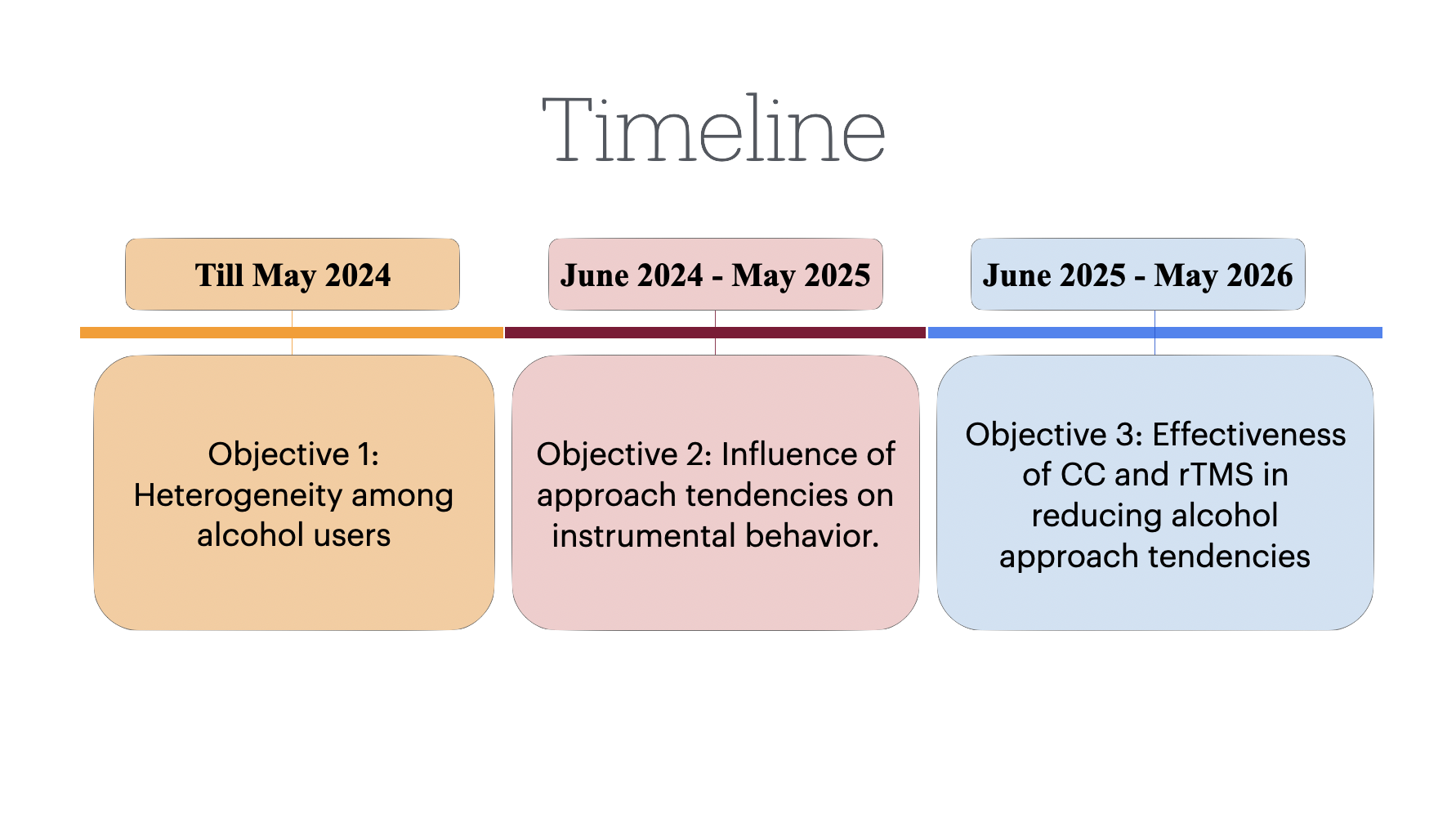

Objective 1: Neurocognitive Heterogeneity Among Alcohol Users
- Classified alcohol-using individuals into approach-tendency and avoidance-tendency subgroups based on the Alcohol Approach Index derived from the Alcohol Approach-Avoidance Task (A-AAT)
- Approach-tendency individuals showed significantly attenuated right-frontal N2 and centroparietal P3b amplitudes during alcohol cue processing relative to avoidance-tendency individuals and non-drinking controls
- Avoidance-tendency individuals showed neural profiles statistically indistinguishable from non-drinkers despite comparable alcohol use histories, arguing against a uniform exposure-based account of neurocognitive deficits
- AAI scores correlated continuously with both ERP components, confirming that neurocognitive differences scale with the degree of approach bias rather than reflecting a categorical split
- Established that neurocognitive heterogeneity within alcohol users is meaningful and subgroup-specific, with direct implications for personalized intervention design

Objective 2: Influence of Approach Tendencies on Instrumental Behavior
- Employed a Pavlovian-to-Instrumental Transfer (PIT) paradigm to assess how background alcohol cues bias ongoing goal-directed instrumental behavior, a more ecologically representative measure of cue influence than the A-AAT alone
- Approach-tendency individuals showed attenuated right-frontal N2 during avoidance-congruent instrumental responding under alcohol cue influence, despite comparable behavioral error rates to avoidance-tendency individuals, indicating elevated neural regulatory burden at threshold in this group
- Established that the automatic system is not unitary and that single-measure outcome assessment in intervention research is insufficient
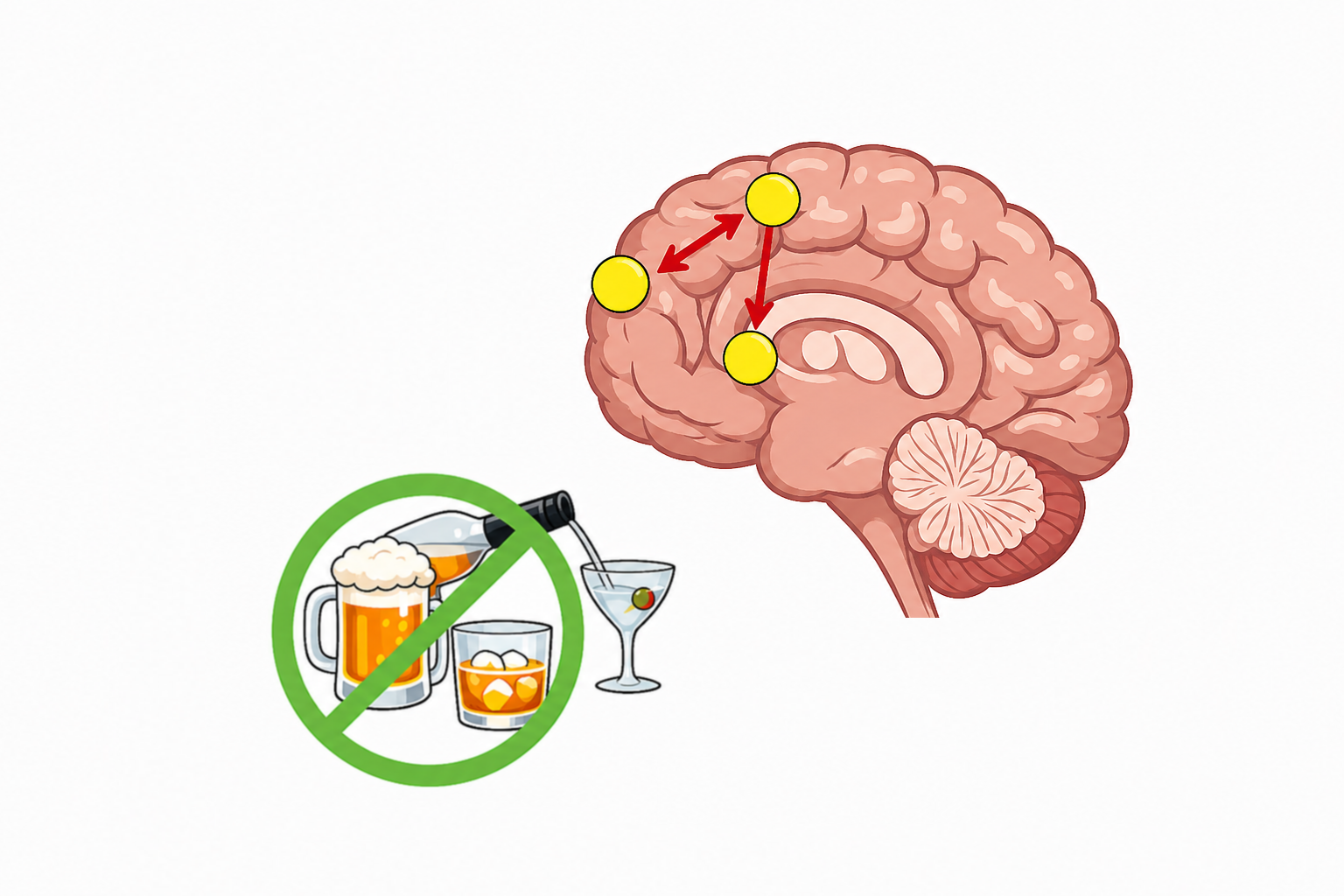
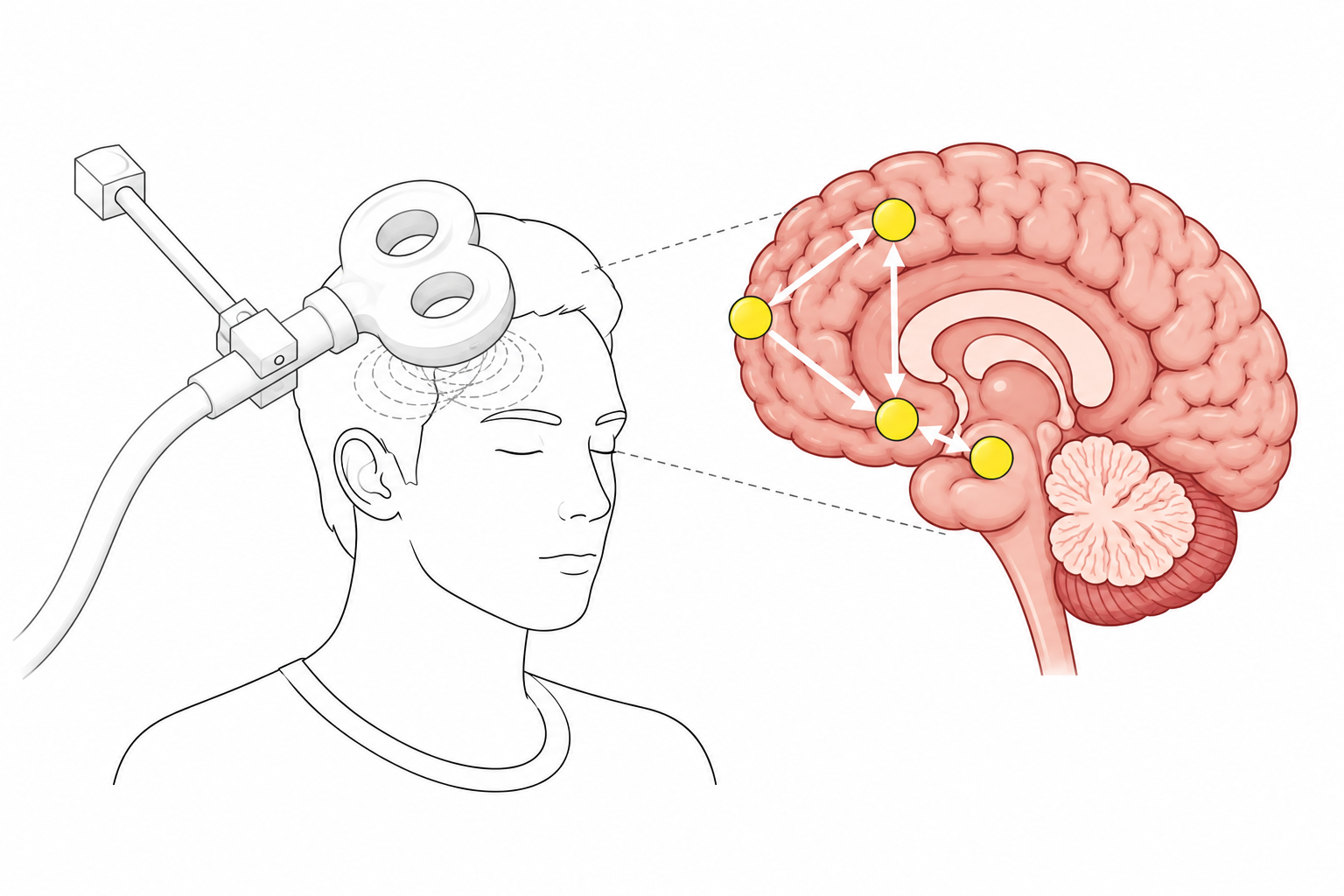
Objective 3: Modulation of Automatic Approach Tendencies Using Counterconditioning and Excitatory rTMS
- Counterconditioning (CC) by pairing alcohol cues with monetary loss selectively reduced automatic pull towards alcohol in approach-tendency individuals, accompanied by partial restoration of attenuated ERP responses
- Active high-frequency (10 Hz) excitatory repetitive transcranial magnetic stimulation (rTMS) over the right dorsolateral prefrontal cortex (rDLPFC) selectively facilitated alcohol avoidance responses without modifying approach responses, establishing rDLPFC as specifically supporting avoidance implementation rather than suppressing automatic approach toward alcohol
- Concurrent ERP data showed enhanced right-frontal N2 following active rTMS, consistent with strengthened conflict monitoring during alcohol cue processing
- Sham stimulation produced a progressive within-session strengthening of approach automaticity (faster approach, slower avoidance, declining N2), demonstrating that unguided cue exposure without regulatory support may strengthen rather than extinguish approach habits
- Provided the first mechanism-guided causal evidence for right prefrontal targeting in approach-avoidance regulation, contrasting with convention-based left DLPFC protocols in existing rTMS literature for alcohol-related disorders
- Established that the critical failure in the approach-avoidance imbalance lies in avoidance implementation, not in approach strength
Objective 4: Causal Dissociation of Frontoparietal Contributions to Approach-Avoidance Regulation
- Applied inhibitory continuous theta burst stimulation (cTBS) separately to rDLPFC and right posterior parietal cortex (rPPC) in two independent participant groups using a within-subject counterbalanced active vs. sham design
- Functional effectiveness of stimulation was confirmed through behavioral manipulation checks: stop-signal reaction time for rDLPFC and attentional reorienting cost for rPPC
- rDLPFC suppression selectively impaired alcohol avoidance responses without affecting approach, confirming rDLPFC as causally necessary for effortful avoidance implementation
- rPPC suppression produced a qualitatively different, bidirectional, alcohol-specific shift: avoidance slowed and approach accelerated simultaneously, with no change in non-alcohol responses, interpreted as disruption of salience-based competitive action prioritization
- Established that rDLPFC and rPPC make mechanistically dissociable causal contributions to approach-avoidance regulation, representing two distinct failure modes within the frontoparietal control network
- Demonstrated that the reflective control system has internal structure, not a single regulatory entity, with direct implications for neuromodulation target selection in future intervention research
Results Dissemination
Publications
- Verma, A. K., Kumar, A. D., Chivukula, U., & Kumar, N. (2026). Causal Dissociation of Frontoparietal Control Mechanisms in Automatic Alcohol Approach Tendencies Using Continuous Theta Burst Stimulation. BioRxiv. https://doi.org/10.64898/2026.04.19.719365
- Verma, A. K., Kumar, A. D., Chivukula, U., & Kumar, N. (2026). Modulation of automatic alcohol approach tendencies using single-session 10Hz rTMS over the right dLPFC in males. Drug and Alcohol Dependence, 287, 113291. https://doi.org/10.1016/j.drugalcdep.2026.113291
- Verma, A. K., Chivukula, U., Garbusow, M., & Kumar, N. (2025). Counterconditioning Alcohol Cues: Neural and Behavioral Modulation of Automatic Tendencies and Pavlovian-to-Instrumental Transfer in Male Alcohol Users. BioRxiv. https://doi.org/10.1101/2025.11.10.687519
- Verma, A. K., Kumar, A. D., Chivukula, U., & Kumar, N. (2025). Neural mechanisms underlying approach and avoidance tendencies in alcohol use among males: An electrophysiological investigation. Biological Psychology, 202, 109144. https://doi.org/10.1016/j.biopsycho.2025.109144
Presentations
- Verma, A. K., Kumar, A. D., Chivukula, U., & Kumar, N. (2026). High-Frequency rTMS Modulates Automatic Alcohol Approach Tendencies: A Neurophysiological Investigation. 17th World Congress of the International Neuromodulation Society (INS 2026), Lisbon, Portugal.
- Verma, A. K., Chivukula, U., & Kumar, N. (2026). Investigating Behavioral and Neurocognitive Mechanisms Underlying Automatic Tendencies in Alcohol Use: From Classification to Neuromodulation. Prime Minister’s Research Fellows Annual Symposium 2026, IIT Guwahati & Ministry of Education, Guwahati, India.
- Verma, A. K., Chivukula, U., Garbusow, M., & Kumar, N. (2025). Modulating Alcohol Approach Tendencies and Instrumental Responses Using Counterconditioning. Neuroscience 2025, Society for Neuroscience, San Diego, CA.
- Verma, A. K., Chivukula, U., & Kumar, N. (2025, Accepted). Counterconditioning as a Neurocognitive Intervention for Modulating Alcohol Approach Tendencies. 7th Pacific Rim Conference, International Neuropsychological Society (INS), Australasian Society for the Study of Brain Impairment (ASSBI), & Australian Psychological Society’s College of Clinical Neuropsychologists (CCN), Brisbane, Australia.
- Verma, A. K., Kumar, A. D., Chivukula, U., & Kumar, N. (2024). Influence of Approach and Avoidance Tendencies on Neural Dynamics in Heavy Drinkers: An ERP-based Investigation for Alcohol Group Sub-classification. Neuroscience 2024, Society for Neuroscience, Chicago, IL.